
Ecommerce has always been driven by technology, but AI in ecommerce represents the biggest shift since the advent of mobile shopping and cloud-based platforms.
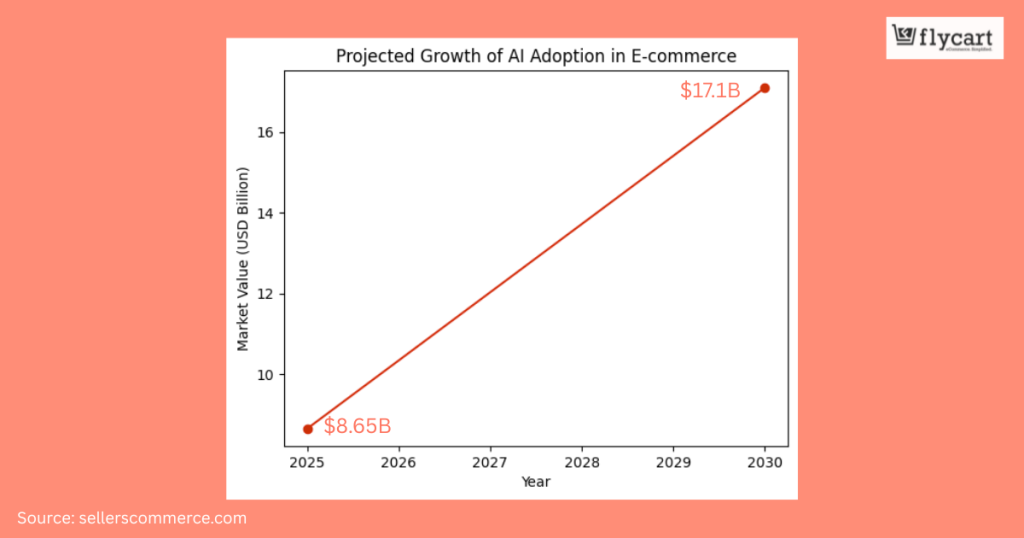
What started as simple automation, like email triggers and rule-based recommendations, has now evolved into intelligent systems that learn, predict, and optimize every stage of the customer journey.
In 2026, ecommerce businesses are no longer asking whether to adopt AI, but how fast they can implement it.
Rising customer expectations, fierce competition, shrinking margins, and growing data complexity make artificial intelligence not just a growth lever but a survival tool.
From personalized product recommendations and dynamic pricing to AI-powered discounts and predictive inventory planning, the use of AI in ecommerce is redefining how online stores attract, convert, and retain customers.
In this in-depth guide, you’ll learn:
- What AI in ecommerce really means
- The role of AI across B2C and B2B ecommerce
- Practical use cases and real-world examples
- Benefits, challenges, and future trends
- How WooCommerce AI fits into this ecosystem, particularly in conversion optimization through smart discounts.
Are you running an ecommerce store on WooCommerce?
Use Discount Rules for WooCommerce by Flycart to create smart, conversion-focused discounts.
Table of contents
- What is AI in Ecommerce?
- Key AI Technologies Used in Ecommerce
- The Role of AI in Ecommerce Today
- Benefits of AI in Ecommerce
- How AI is Used in Ecommerce? (Use Cases)
- 9 Examples of AI in Ecommerce (Real Brands)
- 1. Amazon – Personalized Recommendations & Smart Fulfillment
- 2. Alibaba – Conversational AI & Logistics Optimization
- 3. Nike – Fit & Personalization Enhancements
- 4. Sephora – Virtual Try-Ons & Chatbots
- 5. eBay – Visual Search & Seller Assistance
- 6. H&M – Demand Forecasting & Inventory Optimization
- 7. Lenskart – Virtual Try-Ons for Eyewear
- 8. Walmart – AI Shopping Assistance
- 9. UrbanStems – AI for Customer Service
- Ecommerce AI for Different Business Models
- Challenges & Limitations of AI Ecommerce
- Future of AI in Ecommerce (2026 & Beyond)
- Steps to Start Using AI in Ecommerce
- AI in WooCommerce: What Store Owners Should Know?
- Smart Discount Plugin for Your WooCommerce Store
- Conclusion
- Frequently Asked Questions
What is AI in Ecommerce?
AI in ecommerce refers to the application of artificial intelligence technologies, such as machine learning (ML), natural language processing (NLP), computer vision, and predictive analytics, to automate, optimize, and personalize ecommerce operations.
Unlike traditional ecommerce tools that rely on static rules, AI ecommerce systems continuously analyze data, learn from customer behavior, and improve outcomes over time.
Key AI Technologies Used in Ecommerce
- Machine Learning (ML): Learns patterns from customer data to make predictions
- Natural Language Processing (NLP): Powers chatbots, search, and voice commerce
- Computer Vision: Enables visual search and image-based recommendations
- Predictive Analytics: Forecasts demand, churn, and purchase intent.
Together, these technologies allow ecommerce businesses to move from reactive decision-making to proactive, data-driven growth.
The Role of AI in Ecommerce Today
The role of AI in ecommerce has expanded far beyond recommendations. AI now touches nearly every operational and customer-facing function.
1. Decision-Making at Scale
AI processes millions of data points, customer behavior, purchase history, and browsing patterns in real time. This enables smarter decisions around pricing, promotions, inventory, and merchandising.
2. Hyper-Personalization
Instead of showing the same storefront to everyone, AI tailors:
- Homepage layouts
- Product recommendations
- Discount offers
- Email and SMS campaigns
3. Real-Time Optimization
AI adjusts pricing, promotions, and messaging instantly based on user intent, device, location, and behavior.
In short, Artificial Intelligence transforms ecommerce from a static storefront into a living, adaptive experience.
Benefits of AI in Ecommerce
Adopting AI for ecommerce delivers measurable and scalable advantages across marketing, operations, and customer experience.
- Increased Conversion Rates: AI personalizes product recommendations, pricing, and promotions, making customers more likely to complete purchases.
- Higher Average Order Value (AOV): AI-driven cross-selling, upselling, and bundling encourage customers to buy more per transaction.
- Reduced Cart Abandonment: AI identifies abandonment triggers and deploys timely interventions such as personalized discounts or reminders.
- Improved Customer Retention: AI-powered personalization builds stronger customer relationships, increasing repeat purchases and lifetime value.
- Lower Operational Costs: Automation reduces manual work in pricing, inventory planning, customer support, and marketing.
- Smarter Decision-Making: AI transforms raw data into actionable insights, enabling faster and more accurate business decisions.
AI doesn’t replace human strategy; it enhances and amplifies it.
How AI is Used in Ecommerce? (Use Cases)
The use of AI in ecommerce spans multiple business functions.
Below are the most impactful applications driving results in 2026:
(1) AI for Product Recommendations
AI recommendation engines analyze browsing history, purchase behavior, and similar customer profiles to suggest products customers are most likely to buy.
Why It Matters?
- Higher average order value (AOV)
- Increased cross-sell and upsell
- Improved customer satisfaction
(2) AI-Powered Search & Merchandising
AI-enhanced search understands intent, not just keywords. It can:
- Handle typos and synonyms
- Rank products based on likelihood to convert
- Personalize results per user
Visual search also allows customers to upload images and find similar products instantly.
(3) Dynamic Pricing & Smart Discounts
AI pricing engines adjust prices and discounts based on:
- Demand fluctuations
- Customer lifetime value
- Inventory levels
- Competitor pricing
AI-driven discounts outperform static coupons because they trigger offers only when customers are most likely to convert.
(4) AI in Inventory Forecasting
AI predicts demand by analyzing:
- Historical sales data
- Seasonal trends
- Marketing campaigns
- External factors (events, weather, trends)
This reduces stockouts, overstocking, and cash flow issues.
(5) Fraud Detection & Secure Payments
AI identifies suspicious transactions in real time by detecting unusual behavior patterns, protecting both merchants and customers.
(6) AI Customer Support & Chatbots
AI chatbots handle:
- Order tracking
- Product questions
- Returns and refunds
Advanced bots learn from interactions and improve responses over time, reducing support costs.
(7) AI-Driven Marketing Automation
AI optimizes:
- Email send times
- Subject lines
- Ad targeting
- Retargeting campaigns
This results in higher ROI with less manual effort.
9 Examples of AI in Ecommerce (Real Brands)
Many major brands, both global enterprises and digitally native stores, have already adopted AI in their ecommerce operations to improve personalization, streamline processes, and boost conversions.
Here’s a breakdown of well-known examples and how they use AI for specific purposes:
1. Amazon – Personalized Recommendations & Smart Fulfillment
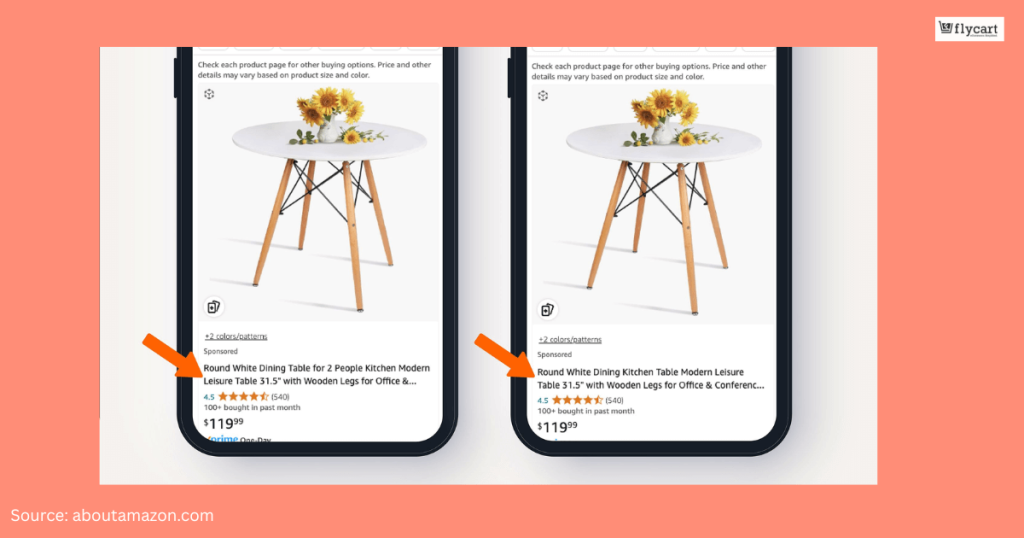
Amazon is one of the earliest and most iconic adopters of AI in ecommerce.
Its recommendation engine analyzes massive amounts of customer browsing and purchase data to suggest products that visitors are most likely to buy.
This system is a core revenue driver, accounting for a significant portion of total sales.
Amazon also uses AI in logistics (e.g., warehouse automation, robotic picking, and optimized packing) and in cashier-less physical stores (Amazon Go) using computer vision and sensor AI.
AI Use Cases:
- Personalized recommendations
- Product suggestions in emails and homepage
- Automated fulfillment & checkout systems.
2. Alibaba – Conversational AI & Logistics Optimization
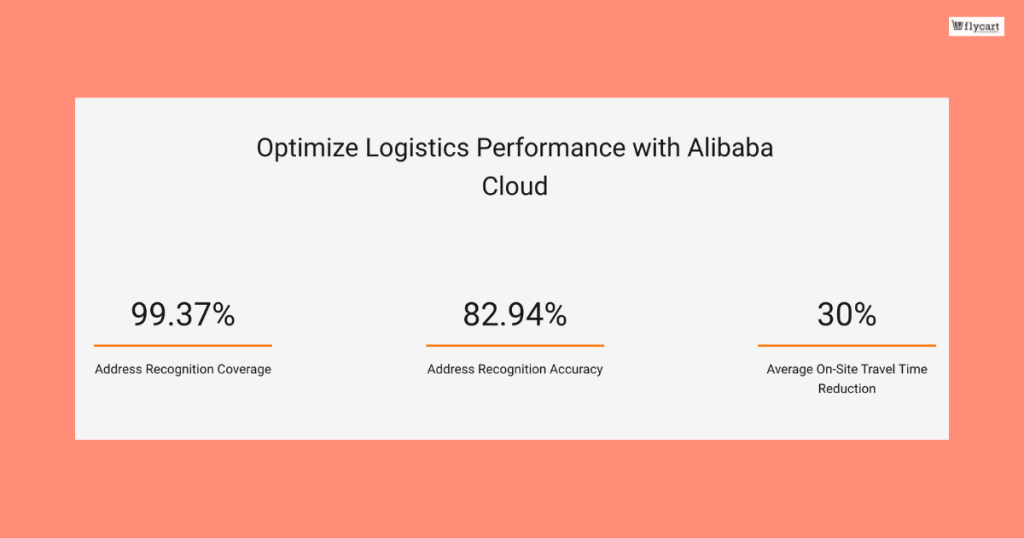
Alibaba integrates AI throughout its ecommerce ecosystem.
Chatbots powered by NLP (natural language processing) handle millions of customer queries, while AI optimizes warehouse operations and delivery routes in logistics.
AI also supports fraud detection and dynamic pricing.
AI Use Cases:
- Customer support via AI chat
- Smart logistics for faster delivery
- Fraud prevention.
3. Nike – Fit & Personalization Enhancements
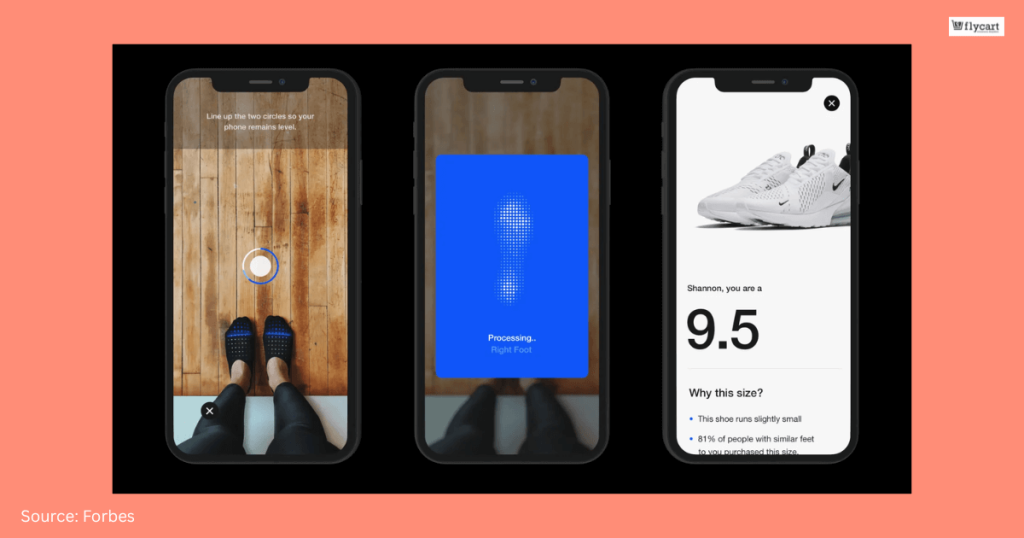
Machine learning helps Nike deliver personalized shopping experiences, like the Nike Fit feature that scans customers’ feet to recommend the right shoe size.
Advanced analytics also allow the brand to tailor marketing messages and create highly personalized email campaigns based on user behavior.
How AI is Being Used?
- Size recommendation
- Personalized marketing and email content
- Tailored shopping experiences.
4. Sephora – Virtual Try-Ons & Chatbots

Sephora’s Virtual Artist uses computer vision to let customers virtually try makeup products via smartphone or desktop.
AI-powered chatbots offer beauty advice, product guidance, and personalized recommendations directly within the app or site.
This increases engagement and conversion by making product discovery interactive.
AI Use Cases:
- Virtual product try-ons
- AI chatbot for suggestions & support
- Personalized beauty recommendations.
5. eBay – Visual Search & Seller Assistance
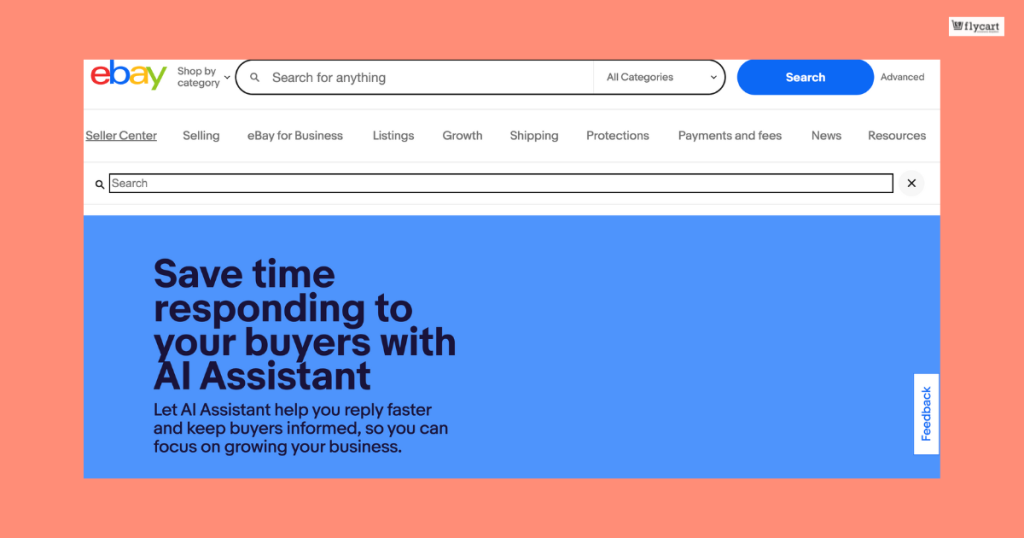
eBay has integrated AI to enable visual search: shoppers can upload images to find similar products instantly.
The platform also provides generative AI tools for sellers to auto-generate product descriptions, improving listing quality and search performance.
AI Use Cases:
- Visual search for product discovery
- AI-assisted product description generation
- Enhanced search relevance.
6. H&M – Demand Forecasting & Inventory Optimization
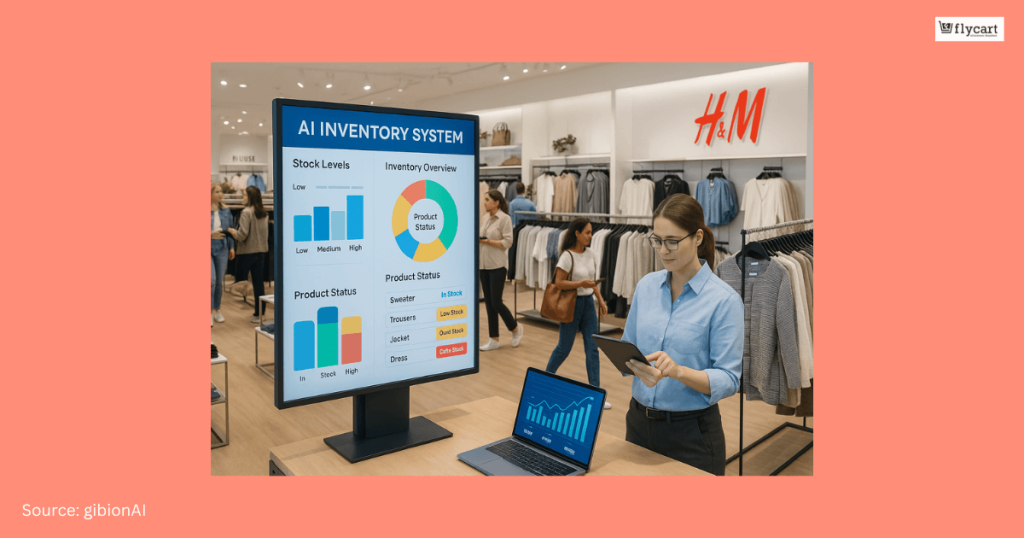
Fashion giant H&M leverages AI models to analyze sales patterns, trends, and social behavior to forecast demand and manage inventory.
This reduces overstock and markdowns by aligning stock levels with predicted customer demand across different regions.
Use Cases of AI:
- Predict fashion trends
- Inventory planning & optimization
- Reduce excess stock and markdown losses.
7. Lenskart – Virtual Try-Ons for Eyewear

Lenskart uses AI-powered virtual try-on technology that maps a user’s face using 3D algorithms so shoppers can see how glasses or sunglasses look on them before buying, removing a major barrier to purchase in online eyewear retail.
AI Use Cases:
- AI virtual try-ons to improve purchase confidence
- Increased engagement and reduced returns.
8. Walmart – AI Shopping Assistance
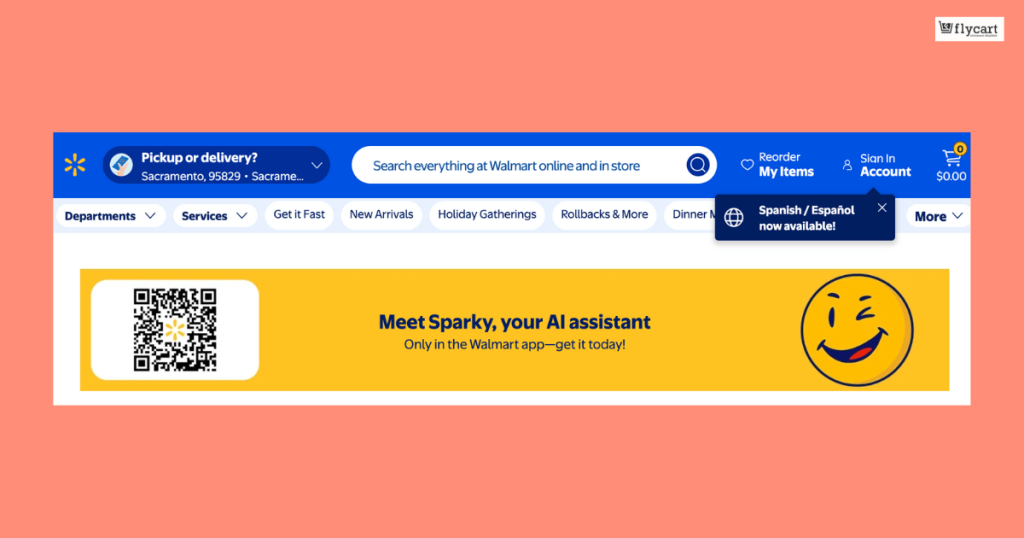
Walmart uses Sparky, its in-house AI assistant, to enhance both the customer shopping experience and internal operations across its ecommerce ecosystem.
Sparky leverages AI and machine learning to understand customer intent and provide relevant, contextual responses.
Customers can ask questions such as product availability, pricing, delivery timelines, and recommendations, similar to interacting with a human store associate, but at a digital scale.
AI Applications in Action:
- Conversational shopping via AI
- Smarter Product Discovery
- Improve efficiency in the supply chain and inventory
- Simplify customer interactions.
9. UrbanStems – AI for Customer Service
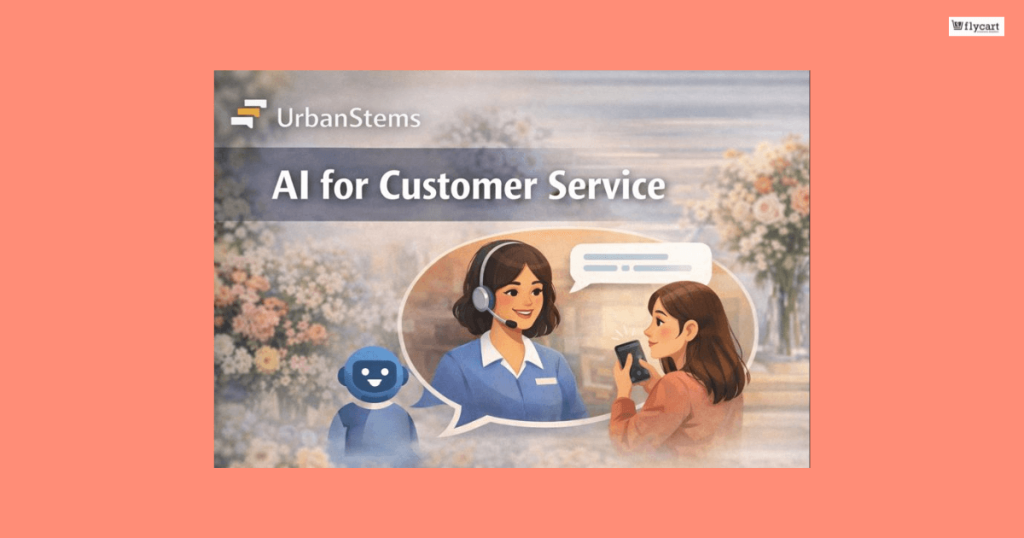
UrbanStems is a direct-to-consumer florist that experiences extreme spikes in customer support demand around major gifting holidays like Mother’s Day and Valentine’s Day.
UrbanStems utilizes AI chatbots to collect key information from customers upfront. These bots ask targeted questions, resolving simple issues automatically or preparing detailed briefings for human agents when needed. Automating routine requests frees support teams to focus on complex challenges. This also boosts productivity and reduces costs.
Use Cases of Artificial Intelligence:
- Smart Chatbots for First Contact
- Faster Training for Temporary Staff
- Brand-Aligned AI Communication
Ecommerce AI for Different Business Models
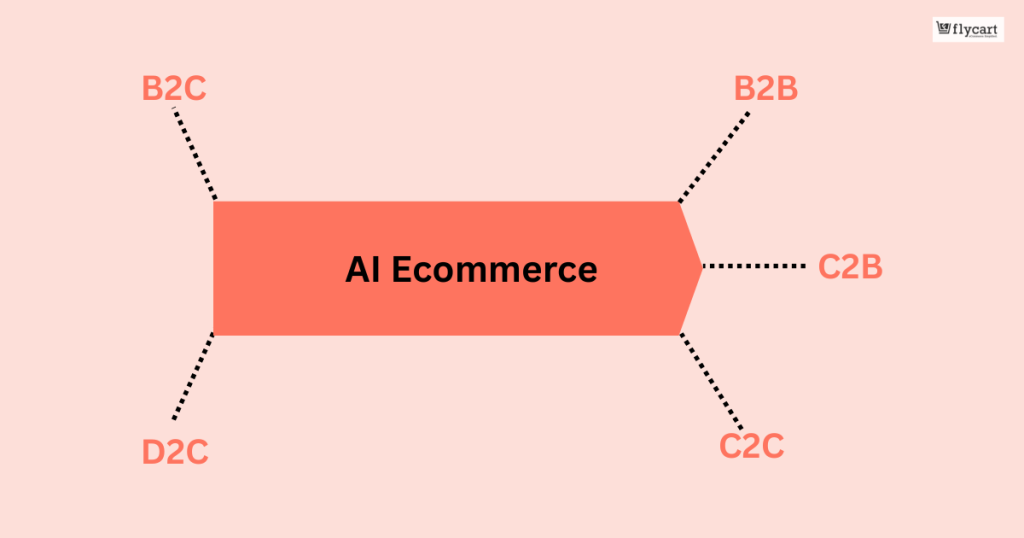
AI in ecommerce adapts differently depending on the business model.
Each model: B2B, B2C, D2C, C2C, and C2B, has unique customer behavior, transaction complexity, and operational needs.
Below is how AI ecommerce fits into each model and delivers measurable value:
AI Ecommerce and B2B
B2B (Business-to-Business) ecommerce involves companies selling products or services to other businesses, often in bulk, with negotiated pricing, long sales cycles, and repeat orders.
AI in B2B ecommerce focuses on automation, personalization at the account level, and demand prediction rather than impulse buying.
- AI analyzes historical order data to predict reordering cycles
- Machine learning enables dynamic, customer-specific pricing
- AI personalizes catalogs, pricing tiers, and payment terms per account.
Benefits of AI in B2B Ecommerce
- Faster purchasing decisions
- Reduced manual pricing and negotiations
- Accurate demand forecasting
- Higher customer lifetime value.
Example: A wholesale distributor uses AI to predict when a business customer will need replenishment and automatically sends a personalized reorder reminder with volume-based pricing.
Artificial Intelligence for Ecommerce and B2C
B2C (Business-to-Consumer) ecommerce involves businesses selling directly to individual consumers, typically driven by convenience, personalization, and emotional buying decisions.
AI in B2C ecommerce focuses heavily on personalization, real-time optimization, and conversion rate improvement.
- AI recommends products based on browsing and purchase behavior
- Dynamic pricing and offers adapt to demand and user intent
- AI chatbots handle customer support and product discovery.
Benefits of AI in B2C Ecommerce
- Higher conversion rates
- Increased average order value
- Reduced cart abandonment
- Improved customer satisfaction.
Example: An online fashion store uses AI to show personalized product recommendations and triggers exit-intent discounts when users are about to leave.
AI Ecommerce and D2C
D2C (Direct-to-Consumer) ecommerce allows brands to sell directly to customers without intermediaries, giving full control over branding, pricing, and customer data.
AI helps D2C brands compete with marketplaces by delivering hyper-personalized experiences.
- AI segments customers based on behavior and loyalty
- Smart bundling and cross-sell recommendations increase AOV
- AI predicts churn and re-engages customers proactively.
Benefits of AI in D2C Ecommerce
- Stronger brand-customer relationships
- Better use of first-party data
- Higher repeat purchase rates
- Improved marketing ROI.
Example: A D2C skincare brand uses AI to recommend personalized product routines and offers targeted discounts based on customer lifecycle stage.
AI Ecommerce and C2C
C2C (Consumer-to-Consumer) ecommerce enables individuals to sell products or services to other individuals through a marketplace platform.
AI in C2C ecommerce focuses on trust, discovery, and pricing fairness.
- AI detects fraudulent listings and transactions
- Recommendation engines surface relevant listings
- Dynamic pricing suggestions help sellers price competitively.
Benefits of AI in C2C Ecommerce
- Safer marketplace environments
- Faster product discovery
- Improved seller success rates
- Higher platform trust.
Example: A resale marketplace uses AI to detect fake listings and recommend fair prices based on market demand and item condition.
Ecommerce and C2B with AI
C2B (Consumer-to-Business) ecommerce allows individuals to offer products, services, or value to businesses, such as freelancers, influencers, or data contributors.
AI enables C2B businesses to evaluate, match, and price consumer-generated value efficiently.
- AI matches consumer skills or content with business needs
- Predictive analytics determines fair pricing or compensation
- AI evaluates performance and quality at scale.
Benefits of AI in C2B Ecommerce
- Faster talent and service matching
- Data-driven pricing decisions
- Reduced operational overhead
- Improved quality control.
Example: A freelance marketplace uses AI to match professionals with projects and recommend pricing based on skills, experience, and demand.
Across all models, AI ecommerce adapts to customer behavior, transaction complexity, and scale.
Whether you’re running an ecommerce B2C store or a B2B wholesale platform, AI enables smarter decisions, higher efficiency, and better customer experiences.
Challenges & Limitations of AI Ecommerce
Despite its benefits, using AI in ecommerce comes with challenges that businesses must address thoughtfully.
- Data Quality and Integration Issues
AI depends on clean, accurate, and integrated data. Poor data quality leads to weak predictions and ineffective automation.
- Initial Setup Complexity
Implementing AI requires time, expertise, and tool alignment, especially for businesses new to data-driven systems.
- Privacy and Compliance Concerns
AI systems must comply with data protection regulations and handle customer data responsibly.
- Over-Automation Risks
Relying too heavily on AI without human oversight can result in poor customer experiences or brand inconsistency.
The best approach is to start small, test performance, and scale responsibly.
Future of AI in Ecommerce (2026 & Beyond)
The next phase of AI ecommerce will push beyond optimization into autonomy and hyper-personalization.
- Hyper-Personalized Storefronts
Each visitor will see a completely unique storefront based on behavior, intent, and preferences.
- Voice and Conversational Commerce
AI-powered voice assistants and chat interfaces will become mainstream shopping channels.
- AI-Generated Product Content
AI will create product descriptions, images, and videos dynamically based on customer intent.
- Autonomous Pricing and Promotions
AI systems will independently adjust pricing and discounts in real time without manual input.
Businesses that adopt AI early will build long-term competitive advantages in customer loyalty and operational efficiency.
Steps to Start Using AI in Ecommerce
Follow these steps to start using AI in your ecommerce business:
- Audit Your Data Readiness: Ensure customer, product, and sales data are accurate and accessible.
- Identify High-Impact Use Cases: Start with areas like recommendations, pricing, or discounts that deliver quick ROI.
- Choose AI Tools Aligned With Your Platform: Select tools that integrate seamlessly with your ecommerce platform.
- Test, Measure, and Optimize Continuously: AI improves over time, monitor performance and refine strategies regularly.
AI in WooCommerce: What Store Owners Should Know?
Are you running your online store on the WooCommerce platform?
AI WooCommerce adoption is accelerating due to WooCommerce’s flexible plugin ecosystem and customization options.
WooCommerce supports AI through:
- Smart recommendation plugins
- AI-powered search tools
- AI-driven marketing and pricing plugins.
This flexibility makes WooCommerce one of the most adaptable platforms for AI-driven ecommerce, suitable for businesses of all sizes.
WooCommerce AI for Smart Discounts & Higher Conversions
Traditional coupons fail because they:
- Apply to everyone
- Reduce margins unnecessarily
- Ignore customer intent and behavior.
AI-powered discount logic allows stores to:
- Trigger offers based on cart value or behavior
- Personalize discounts per customer
- Increase conversions without blanket promotions.
Smart Discount Plugin for Your WooCommerce Store
“Discount Rules for WooCommerce -Pro (by Flycart)” enables WooCommerce discount automation by:
- Creating advanced conditional discounts
- Supporting bulk, BOGO, and cart-based rules
- Optimizing offers for conversions, not just visibility.
Here are a few guides to get started with WooCommerce advanced discounts using the “Discount Rules Pro” plugin:
- How to Add a WooCommerce Discount to Increase Sales? (7 ideas)
- How to Create a WooCommerce Bulk Discount?
- How to Create WooCommerce Buy One Get One (BOGO) Free Offers?
- WooCommerce Coupons – The Complete Guide
- How to Add a WooCommerce Free Gift with Purchase?
Turn your WooCommerce discounts into conversion engines.
Try the “Discount Rules for WooCommerce” plugin to implement smarter, data-driven offers without complexity.
Conclusion
AI in ecommerce is no longer experimental; it’s foundational.
Ecommerce businesses that embrace AI-driven personalization, pricing, and promotions will lead the market in 2026 and beyond.
For WooCommerce store owners, combining WooCommerce AI capabilities with smart tools like “Discount Rules for WooCommerce -Pro” is one of the fastest ways to increase conversions, boost AOV, and build long-term customer loyalty.
Frequently Asked Questions
Focus on solving real customer problems before automating everything.
Yes. Modern AI tools are affordable and scalable.
Absolutely. WooCommerce’s plugin ecosystem makes AI adoption flexible and cost-effective.
By personalizing experiences, optimizing pricing, and triggering smarter offers.