
WordPress continues to power a massive portion of the internet, and its role in digital business keeps expanding each year. As we move into 2026, WordPress web development strategies are evolving faster than ever. Store owners, developers, and digital entrepreneurs now demand faster performance, stronger security, better scalability, and smoother user experiences.
At the same time, competition across industries keeps rising. That means your website cannot simply look good. It must load fast, convert visitors, scale effortlessly, and integrate seamlessly with marketing tools and eCommerce platforms like WooCommerce.
This blog walks you through 10 proven WordPress web development tips that align with modern standards, user behavior, and future-ready (AI) technology.
You will learn practical ways to structure your site, optimize performance, improve security, and build with long-term growth in mind.
Whether you run a content site, service business, or WooCommerce store, these strategies will help you create a WordPress website that performs, converts, and stands strong in 2026 and beyond.
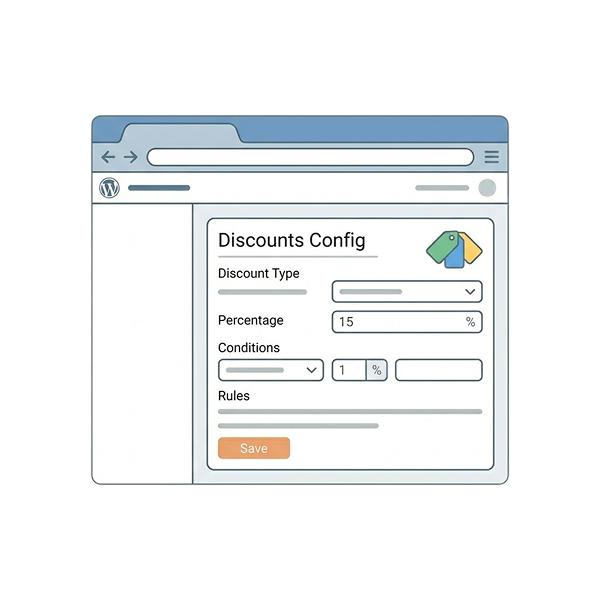
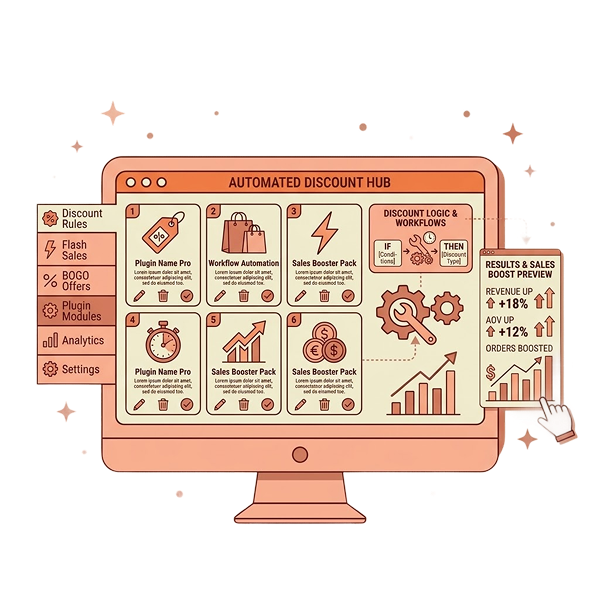
If your WordPress site runs WooCommerce, use “Discount Rules for WooCommerce -Pro” to automate discounts, create bundles, and boost sales effortlessly.
Why a Strong Website Remains a Core Business Asset for Growth in 2026?
Even as mobile apps, social commerce, and AI chat experiences continue to grow, business websites remain the foundation of digital success. A strong website offers full brand control, long-term visibility, and consistent revenue opportunities.
In 2026, it plays a bigger role than ever in shaping customer trust and online performance.
Key Reasons Websites Still Drive Business Growth
- Full Ownership of Your Online Presence
Unlike social platforms or app marketplaces, a website gives complete control over design, content, data, and customer relationships. As algorithms change frequently, having your own digital space ensures stability and long-term visibility.
- Better Search Engine Visibility and Organic Traffic
Websites continue to dominate search engine results. With strong SEO strategies, businesses attract consistent, high-intent visitors who are actively searching for products, services, and solutions.
- Higher Trust and Brand Credibility
Customers often verify brands through their websites before making purchasing decisions. A professional website builds authority, showcases reviews, and presents clear business information.
- Central Hub for All Marketing Channels
Every ad campaign, email newsletter, and social media post drives traffic back to the website. This creates a unified marketing ecosystem that improves conversions.
- Flexible Sales and Monetization Opportunities
From online stores and bookings to subscriptions and digital downloads, websites support multiple revenue models that scale easily.
- Data Ownership and Customer Insights
Businesses gain full access to analytics, behavior tracking, and customer data, enabling smarter marketing decisions.
Overall, while digital platforms evolve, a strong website continues to anchor business growth by offering visibility, control, and long-term scalability.
What is WordPress Web Development?
WordPress (WP) web development refers to building, customizing, and optimizing websites using the WordPress content management system (CMS).
Powering over 43% of all websites globally, WordPress has become the most trusted platform for creating scalable, user-friendly, and high-performing websites.
How WP Powers High-Performance Modern Websites?
At its core, WordPress allows businesses to create websites without complex coding while still offering advanced customization through themes, plugins, and development frameworks. This balance of simplicity and flexibility makes it ideal for startups, small businesses, and large enterprises alike.
One of WordPress’s biggest strengths is its extensive plugin ecosystem. From SEO tools and security enhancements to performance optimization and eCommerce functionality, developers can add nearly any feature with ease. This allows websites to evolve as business needs grow.
Additionally, WordPress supports responsive design, ensuring websites look and function perfectly across desktops, tablets, and mobile devices. With mobile traffic continuing to dominate in 2026, this adaptability is essential.
Performance optimization is another key benefit. Developers can leverage caching plugins, content delivery networks, and lightweight themes to achieve fast-loading pages, which directly improves user experience and search rankings.
WordPress also excels in content management. Businesses can publish blogs, landing pages, product listings, and multimedia content effortlessly, helping maintain consistent online engagement.
Overall, WordPress web development empowers modern websites with flexibility, scalability, and performance, making it a future-ready solution for digital growth.
Why Businesses Trust WordPress to Build Scalable, Future-Ready Websites?
WordPress continues to lead website development in 2026 because it consistently adapts to new technologies, user expectations, and digital trends.
Businesses trust WordPress not just for building websites, but also for the following reasons:
- Unmatched Flexibility for Every Business Type
Whether running a blog, portfolio, corporate site, or online store, WordPress adapts to every business model with ease.
- Massive Plugin and Theme Ecosystem
Thousands of tools allow businesses to add features like SEO optimization, automation, security, and eCommerce without rebuilding websites.
- Strong SEO Foundation
WordPress is built with clean code and structured content, making it naturally search-engine friendly and easy to optimize.
- Scalability for Growing Traffic and Sales
From small websites to enterprise-level platforms, WordPress scales smoothly as traffic and content increase.
- Large Global Developer Community
Continuous updates, security patches, and innovations ensure the platform remains modern and reliable.
- Easy Content Updates and Management
Teams can manage pages, blogs, and products without technical skills, saving time and costs.
- Seamless eCommerce Integration
With WooCommerce, WordPress transforms into a full-featured online store capable of handling global sales.
Because of this balance between power and simplicity, WordPress remains the trusted choice for businesses seeking performance, growth, and long-term digital success.
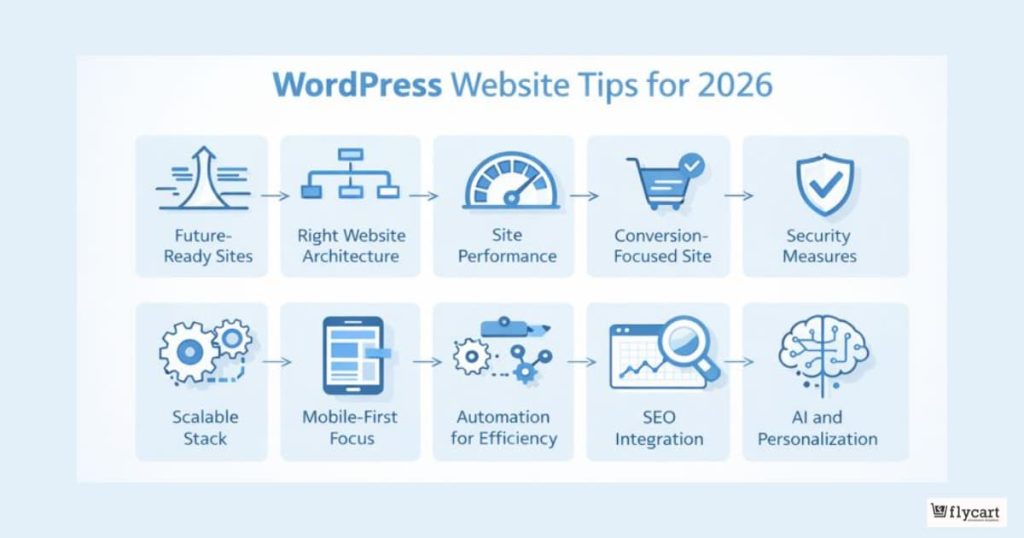
10 WordPress Web Development Tips
Check these 10 WordPress web development tips that will help you scale your business in 2026:
1. Future-Ready Sites
Build Future-Ready Sites with Modern Web Development WordPress Practices!
A strong foundation determines how well your website performs over time. In 2026, WP web development projects focus heavily on clean code, modular architecture, and performance-first thinking.
Modern WordPress development now emphasizes block-based editing, reusable components, and lightweight themes. Instead of relying on bulky multipurpose themes, developers are moving toward custom themes built around Gutenberg blocks or frameworks like GeneratePress and Astra.
This approach keeps your site fast, flexible, and easy to update. It also ensures smoother collaboration between designers, developers, and content teams.
Additionally, modern WordPress development uses version control systems like Git. This allows safe updates, easier debugging, and better teamwork when multiple developers work on the same site.
API integrations also play a growing role. Payment gateways, CRM tools, analytics platforms, and marketing automation software now connect directly with WordPress for real-time data flow.
By adopting modern web development WordPress practices today, you future-proof your website while keeping maintenance simpler and performance stronger.
2. Right Website Architecture
Choose the Right Website Development WordPress Architecture from Day One!
Your site’s architecture impacts everything from speed to SEO to scalability. Smart website development WordPress planning begins with a clear structure and logical organization.
Start with a well-organized content hierarchy. Pages should follow intuitive navigation paths, making it easy for users and search engines to understand your site.
Use custom post types for products, resources, case studies, and portfolios instead of forcing everything into blog posts or pages. This improves content management and SEO clarity.
Database optimization also matters early. Avoid unnecessary plugins that create bloated tables and slow queries. A lean database structure keeps your site fast long-term.
Another critical aspect involves separating frontend and backend concerns. Headless WordPress setups are gaining popularity, where WordPress acts as the CMS while modern frameworks handle the frontend. While not required for every site, this structure offers superior speed and flexibility for large projects.
Proper website development and WordPress architecture ensure that future features can be added without breaking performance or usability.
3. Site Performance
Optimize Performance for Speed, Core Web Vitals, and UX!
Speed directly influences conversions, rankings, and user satisfaction. As Google continues prioritizing Core Web Vitals, performance optimization has become central to web development WordPress success in web development.
Start with high-quality hosting built specifically for WordPress. Managed WordPress hosting provides optimized servers, automatic caching, and strong security layers.
Next, use lightweight themes and limit plugin usage. Every plugin adds scripts, database calls, and potential performance issues.
Implement caching at multiple levels: browser caching, server caching, and page caching. Tools like WP Rocket or built-in host caching systems help significantly.
Optimize images using modern formats like WebP. Also, enable lazy loading to reduce initial page load time.
Minify CSS, JavaScript, and HTML files to reduce file sizes. Content Delivery Networks (CDNs) further improve global load times by serving content closer to users.
Performance-focused web development WordPress strategies result in faster browsing, higher engagement, and better SEO outcomes.
4. Conversion-Focused Site
Design with Conversion-Focused WordPress Web Design Principles!
Great websites do more than look attractive. They guide users toward meaningful actions. That is where conversion-focused site design becomes essential.
Start by simplifying layouts. White space improves readability and directs attention toward important content and calls to action.
Use clear typography with strong contrast for better accessibility and mobile viewing.
Design intuitive navigation that keeps visitors exploring your site instead of leaving quickly.
Strategically place CTAs throughout pages, guiding users toward purchases, signups, or inquiries.
Trust elements like testimonials, security badges, and customer reviews increase credibility and reduce hesitation.
Mobile responsiveness remains critical. With mobile traffic dominating globally, WordPress web design must adapt flawlessly across devices.
When design and usability work together, visitors convert naturally without feeling pressured.
5. Security Measures
Strengthen Security with Proactive Development Measures!
Security threats continue evolving, making proactive protection essential for WordPress sites in 2026.
Begin by choosing secure hosting providers that include firewalls, malware scanning, and daily backups.
Keep WordPress core, themes, and plugins updated consistently. Many breaches happen due to outdated software.
Use strong authentication practices, including two-factor authentication and secure password policies.
Limit admin access and use role-based permissions for contributors.
Install reputable security plugins for intrusion detection and vulnerability monitoring.
Implement SSL certificates for encrypted data transmission.
Security-focused web development WordPress strategies protect user data, maintain trust, and prevent costly downtime.
6. Scalable Stack
Use a Scalable WordPress Development Stack for Growth!
A strong WordPress development stack supports speed, security, and future expansion without constant rebuilding.
Your stack typically includes:
- Optimized WordPress hosting
- Lightweight themes or custom frameworks
- Essential performance plugins
- Security tools
- SEO and analytics integrations.
Modern stacks may also integrate React-based frontends, REST APIs, and automation tools.
Scalable stacks allow you to handle traffic spikes, content expansion, and new features smoothly.
For WooCommerce stores, scalable stacks support large product catalogs, dynamic pricing systems, and high transaction volumes.
Choosing the right WordPress development stack early reduces technical debt and improves long-term ROI.
7. Mobile-First Focus
Master Mobile-First and Accessibility Standards!
Mobile-first development is no longer optional for modern WordPress sites. It forms the foundation of usability and rankings.
Design layouts starting with small screens, then expand for desktops. Optimize touch elements for easy interaction. Use responsive images and flexible layouts.
Accessibility also plays a major role in web development and WordPress practices.
Include proper heading structures, alt text for images, keyboard navigation, and readable color contrasts. Accessible sites reach wider audiences while complying with evolving regulations.
Mobile-friendly and accessible websites create better experiences for every visitor.
8. Automation for Efficiency
Automate Workflows and Maintenance for Long-Term Efficiency!
Automation saves time while improving consistency across WordPress sites.
Use scheduled backups and update systems to maintain security effortlessly.
Automate performance monitoring with uptime alerts. Implement CI/CD pipelines for smoother development deployments.
Use marketing automation tools for email sequences and customer engagement.
Workflow automation frees developers and business owners to focus on growth instead of repetitive maintenance.
Efficient web development WordPress systems scale without adding unnecessary workload.
9. SEO Integration
Integrate SEO at the Development Level!
SEO performs best when built directly into your site’s structure rather than added later.
Use clean URLs and logical page hierarchies. Optimize schema markup for rich results. Ensure fast loading speeds for better rankings.
Structure content with proper heading levels. Use internal linking strategically to guide search engines and users.
SEO-driven website development and WordPress strategies generate consistent organic traffic over time.
10. AI and Personalization
Prepare Your WordPress Sites for AI and Personalization!
AI-driven personalization is becoming mainstream across digital experiences.
WordPress now integrates AI tools for content recommendations, chatbots, dynamic pricing, and user behavior tracking.
Personalized content increases engagement and conversion rates.
Smart product recommendations help WooCommerce stores boost average order value.
AI-powered analytics reveal user behavior patterns for smarter marketing decisions.
Future-ready web development WordPress strategies embrace automation and personalization technologies early.
How Artificial Intelligence is Shaping the Future of Website Development?
Artificial Intelligence is rapidly transforming how websites are designed, managed, and optimized.
In 2026, AI is no longer an optional enhancement but a core driver of performance, personalization, and efficiency across digital platforms. Businesses now use AI to create smarter websites that adapt to user behavior in real time.
One major shift comes from AI-powered design tools that generate layouts based on user goals, industry standards, and conversion data.
Instead of manually testing multiple designs, developers can deploy AI-generated interfaces that automatically adjust for usability and engagement.
Additionally, AI improves content creation and optimization. From writing assistance and image generation to SEO recommendations and keyword optimization, websites can now maintain fresh, relevant content faster than ever. This keeps search rankings strong while saving time and resources.
AI also plays a significant role in personalization.
Modern websites dynamically adjust product recommendations, blog suggestions, and calls-to-action based on visitor behavior. As a result, users experience highly relevant content that increases engagement and conversions.
Customer support has evolved through AI chatbots and virtual assistants. These tools provide instant responses, handle common queries, and guide users through purchases, creating smoother user journeys.
Furthermore, AI-driven analytics predict user trends, identify drop-off points, and suggest optimization strategies.
Businesses gain actionable insights without complex data analysis.
Overall, Artificial Intelligence is shaping website development by making platforms smarter, faster, and more responsive, enabling businesses to deliver exceptional digital experiences while improving efficiency and growth.
Popular AI Tools Powering Modern Website Development
AI tools now play a central role in building and managing high-performing websites.
From design to marketing and customer experience, these solutions streamline processes while improving overall quality.
AI website builders allow users to create full websites simply by answering a few questions about business goals and design preferences. These platforms automatically generate layouts, color schemes, and content structures optimized for usability.
- Content creation tools assist with blog writing, product descriptions, and SEO optimization. They analyze search intent, keyword placement, and readability to help websites rank better while maintaining natural flow.
- Design-focused AI tools generate graphics, banners, and UI elements instantly. This reduces design costs and speeds up branding consistency across pages.
- For performance optimization, AI-driven plugins analyze site speed, detect errors, and suggest improvements automatically. This ensures faster loading times and better user experience.
- Chatbots and customer engagement tools remain among the most valuable AI solutions. They answer questions, qualify leads, recommend products, and guide users through checkout processes.
- Additionally, AI-powered analytics platforms track visitor behavior, heatmaps, and conversion paths. These insights help businesses improve page structure, content flow, and marketing strategies.
Together, these AI tools empower businesses to build smarter websites with less effort while maintaining high performance, personalization, and scalability in today’s competitive digital landscape.
Key AI Techniques That Improve Website Performance and User Experience
Behind every intelligent website lies powerful AI techniques designed to analyze data, predict behavior, and automate improvements. These methods directly enhance both performance and customer satisfaction.
- Machine learning algorithms study user interactions to identify browsing patterns, product interests, and content preferences. Based on this data, websites personalize content, recommendations, and offers in real time.
- Predictive analytics helps businesses anticipate user actions such as purchase intent or exit behavior. Websites can then trigger targeted popups, discounts, or support messages to improve conversions.
- Natural language processing powers chatbots, voice search optimization, and content understanding. This allows websites to communicate naturally with users while improving search visibility.
- Automation techniques manage routine tasks such as image optimization, broken link detection, content scheduling, and security monitoring. This keeps websites running smoothly with minimal manual effort.
- Computer vision technology supports image tagging, visual search features, and accessibility enhancements. Users can search products using images while websites improve their visual SEO performance.
- Behavioral targeting systems adjust page layouts, product placements, and calls-to-action depending on visitor profiles. This ensures every user experiences a tailored website journey.
Through these AI techniques, modern websites deliver faster performance, higher engagement, and stronger conversion rates while continuously improving through real-time data learning.
How WooCommerce Stores Can Apply These Tips for Higher Sales?
For WooCommerce store owners, modern WordPress development directly impacts revenue in the following ways:
- Fast performance improves checkout conversions.
- Mobile optimization boosts purchase rates.
- Security builds customer trust.
- Scalable infrastructure supports growth campaigns.
However, pricing strategies also play a huge role in increasing sales.
This is where “Discount Rules for WooCommerce – Pro” by Flycart becomes a powerful growth tool.
With this advanced discount plugin, you can:
- Create bulk discounts
- Offer cart-based promotions
- Run seasonal campaigns
- Set conditional pricing rules
- Reward loyal customers automatically.
When combined with performance-optimized WordPress development, these dynamic pricing strategies significantly increase conversion rates and average order value.
If you want your WooCommerce store to grow faster, pairing modern development practices with smart discount automation creates a winning formula.
WooCommerce store owners: Turn more visitors into buyers by applying targeted discounts with Discount Rules for WooCommerce Pro.
Conclusion
WordPress continues evolving into a powerful, scalable, and flexible platform for modern businesses.
As 2026 approaches, successful websites will rely on smart web development WordPress strategies focused on performance, security, scalability, and user experience.
From choosing the right website development WordPress architecture to building with a strong WordPress development stack, each decision impacts long-term growth.
Designing with conversion in mind, optimizing speed, improving security, and embracing automation ensure your site stays competitive.
For WooCommerce store owners, combining these technical improvements with smart promotional tools like “Discount Rules for WooCommerce –Pro” helps with higher sales and stronger customer loyalty.
By applying these proven WordPress development tips today, you set your website up for success well into the future.
Also Read: How to Add a PDF Search Engine to WordPress?
Frequently Asked Questions
Modern development improves performance, security, scalability, and user experience, all of which influence rankings and conversions.
Performance checks should happen monthly, with continuous monitoring for traffic spikes or plugin changes.
Optimized hosting, lightweight themes, essential plugins, security tools, and automation systems create a scalable foundation.
Clean layouts, mobile responsiveness, clear CTAs, and trust signals guide users toward actions naturally.
Absolutely. Faster load times, better UX, and automation directly increase sales and customer satisfaction.