
Customer shopping behavior has changed forever. Today’s buyers don’t shop on just one channel. They browse on mobile, compare prices on desktop, discover products on social media, and often complete purchases through marketplaces or physical stores. This shift has made omnichannel ecommerce not just a growth strategy, but a necessity.
For ecommerce businesses, especially WooCommerce store owners, building a scalable omnichannel ecommerce strategy helps unify customer experiences, streamline operations, and increase revenue across all touchpoints.
In this guide, you’ll learn:
- What omnichannel ecommerce really means
- How does ecommerce work across multiple channels
- How to build a scalable ecommerce omnichannel strategy
- Real ecommerce examples with multiple channel integration.
- How WooCommerce stores can implement omnichannel effectively.
Boost your sales effortlessly with Discount Rules for WooCommerce – Pro. Create smart discounts, BOGO deals, and bulk pricing that work seamlessly across all channels.
Table of contents
- What is Omnichannel Ecommerce?
- Ecommerce and Omnichannel: Understanding the Core Difference
- Why Omnichannel Ecommerce Matters for Modern Businesses?
- Omnichannel Ecommerce vs Multichannel Commerce
- Key Components of a Scalable Ecommerce Omnichannel Strategy
- Choosing the Right Omnichannel Ecommerce Platform
- Popular Omnichannel Commerce Solutions Explained
- Building an Omnichannel Ecommerce Strategy Step by Step
- Data, Customer Experience, and Personalization in Omnichannel
- Inventory, Pricing, and Promotions Across Channels
- Common Challenges in Ecommerce and Omnichannel Execution
- How WooCommerce Fits into an Omnichannel Strategy?
- Future Trends in Omnichannel Ecommerce
- Conclusion
- Frequently Asked Questions
What is Omnichannel Ecommerce?
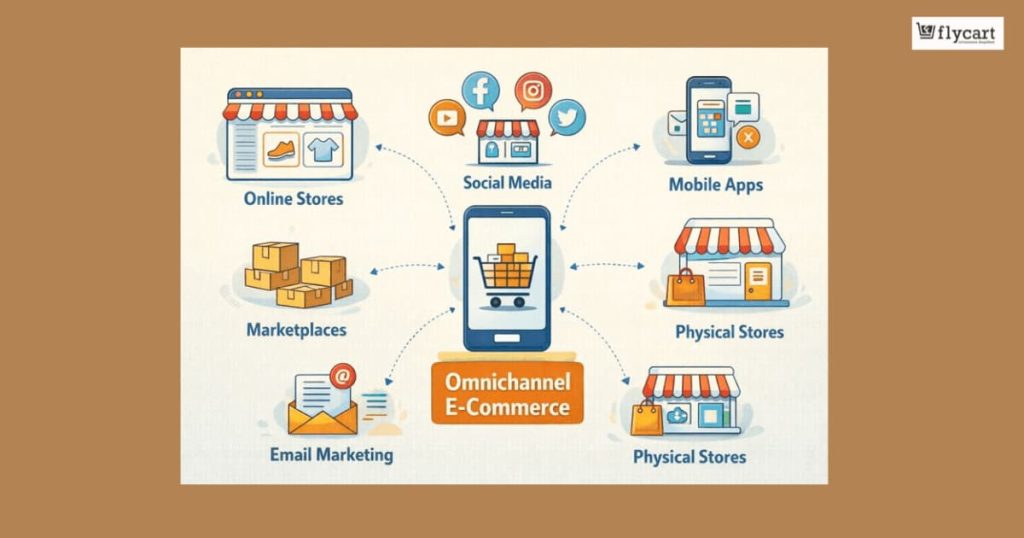
Omnichannel ecommerce is a strategy that integrates all customer touchpoints: online and offline, into one seamless experience.
Instead of managing each sales channel separately, omnichannel ecommerce connects:
- Online stores
- Marketplaces
- Social media
- Mobile apps
- Email marketing
- Physical stores.
The goal is simple: customers should have a consistent experience no matter where or how they interact with your brand.
Omnichannel Ecommerce Examples
- A customer adds a product to their cart on mobile and completes the purchase on desktop.
- A shopper sees a discount on Instagram and uses it on your website.
- A buyer checks in-store availability online before visiting.
These are all examples of omnichannel ecommerce in action.
Ecommerce and Omnichannel: Understanding the Core Difference
Many businesses confuse ecommerce and omnichannel as the same thing, but they are not.
Ecommerce focuses on selling products online through a website or app.
Omnichannel focuses on how customers experience your brand across all channels.
When ecommerce and omnichannel work together:
- Ecommerce becomes more customer-centric
- Marketing becomes more consistent
- Data flows smoothly across channels.
A strong omnichannel ecommerce strategy ensures that ecommerce operations support every channel, not just the website.
Why Omnichannel Ecommerce Matters for Modern Businesses?
Customers expect flexibility. They want convenience, personalization, and continuity.
Here’s why omnichannel ecommerce is critical today:
- Improved Customer Experience: Customers don’t think in channels; they think in journeys. Multichannel ecommerce removes friction from those journeys.
- Higher Conversion Rates: Unified experiences reduce cart abandonment and increase trust.
- Better Customer Retention: Consistent pricing, messaging, and promotions build loyalty.
- Stronger Brand Presence: Your brand appears unified, professional, and reliable across platforms.
For WooCommerce store owners targeting global audiences, ecommerce across multiple channels opens doors to scale without losing control.
Omnichannel Ecommerce vs Multichannel Commerce
Understanding the difference between omnichannel ecommerce and multichannel commerce solutions is important.
Multichannel Commerce Solutions
- Sell on multiple channels
- Channels operate independently
- Data is often siloed.
Omnichannel Ecommerce
- Channels are fully integrated
- Customer data is shared
- Inventory, pricing, and promotions are unified.
Multichannel commerce solutions focus on presence.
Omnichannel ecommerce focuses on experience.
Key Components of a Scalable Ecommerce Omnichannel Strategy
To build a seamless omnichannel ecommerce experience, certain foundational elements must be in place. These ensure that customers receive a consistent, personalized experience no matter how they interact with your brand.
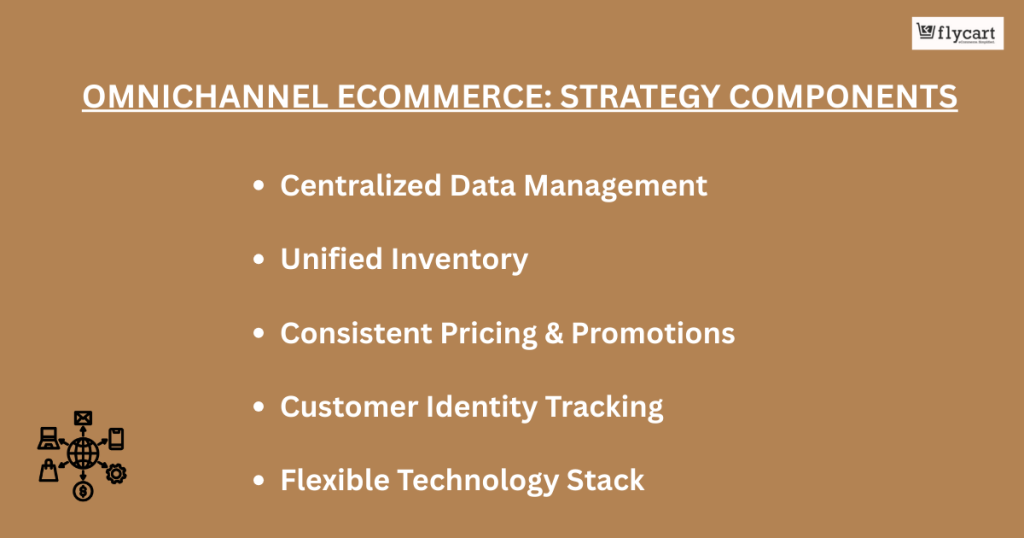
Let’s break down each component in detail.
1. Centralized Data Management
Centralized data management is critical for any ecommerce and omnichannel strategy. This means that all customer, order, and inventory data is stored and synced across all your channels, online store, mobile app, marketplaces, and physical locations.
- Why it matters: When data is centralized, you can make informed decisions quickly. For example, if a customer updates their shipping address on your website, it should automatically reflect in your CRM, email campaigns, and order management system.
- Benefits: Reduces errors, improves personalization, and creates a seamless customer experience.
2. Unified Inventory
A unified inventory system ensures that product availability is accurate across every sales channel in real time.
- Why it matters: Without real-time updates, you risk overselling popular products or showing items as available that are actually out of stock.
- How it works: Integrating inventory management with your ecommerce platform, marketplaces, and physical store ensures stock levels are always accurate.
- Benefits: Enhances customer trust, reduces returns or cancellations, and streamlines operations.
3. Consistent Pricing & Promotions
In an omnichannel commerce solution, discounts, offers, and pricing should be consistent across all platforms: website, mobile app, social media shops, or marketplaces.
- Why it matters: Inconsistent pricing confuses customers and may lead to cart abandonment.
- How it works: Use centralized promotion management tools to ensure the same discounts apply across every channel.
- Benefits: Builds credibility, boosts sales, and encourages repeat purchases.
4. Customer Identity Tracking
Recognizing customers across devices and channels is key to personalization.
- Why it matters: A customer may browse products on their phone, continue on a desktop, and purchase in-store. Tracking this journey ensures they receive tailored recommendations and consistent communication.
- How it works: Tools like CRMs, cookies, and loyalty programs help identify repeat customers, track preferences, and suggest relevant products.
- Benefits: Increases engagement, improves retention, and enables personalized marketing campaigns.
5. Flexible Technology Stack
A flexible technology stack means your tools: ecommerce platform, CRM, marketing automation, and inventory management, can adapt and scale as your business grows.
- Why it matters: Businesses evolve, channels expand, and customer expectations change. Your systems should be able to integrate new tools, manage more data, and support advanced features without a complete overhaul.
- How it works: Choose modular, compatible solutions that can expand with your business needs.
- Benefits: Future-proofs your strategy, reduces IT headaches, and supports long-term growth.
Choosing the Right Omnichannel Ecommerce Platform
Your omnichannel ecommerce platform is the foundation of your strategy.
A good platform should:
- Integrate with multiple sales channels
- Support real-time data syncing
- Allow customization
- Scale with traffic and orders
WooCommerce stands out because it offers flexibility, ownership, and powerful integrations, making it a strong choice for ecommerce growth across multiple channels.
Popular Omnichannel Commerce Solutions Explained
There are many omnichannel commerce solutions available today, including:
- CRM tools
- Marketing automation platforms
- Inventory management systems
- Discount and pricing engines
The best solutions don’t replace your ecommerce platform; they enhance it.
For WooCommerce stores, choosing omnichannel commerce solutions that integrate natively saves time and reduces complexity.
Building an Omnichannel Ecommerce Strategy Step by Step
Creating a scalable omnichannel ecommerce strategy goes beyond simply selling on multiple platforms. It’s about delivering a seamless, consistent, and personalized experience to customers wherever they interact with your brand.
A well-planned approach ensures that every touchpoint, from social media to your online store, works together to guide customers toward purchase.
By following a structured roadmap, businesses can reduce friction, increase engagement, and boost long-term loyalty.
1. Understand Customer Journeys
The first step in building a successful ecommerce and omnichannel strategy is mapping your customer journeys. Today’s shoppers rarely follow a straight path; they might discover products on Instagram, read reviews on marketplaces, visit your website, and then buy via mobile or in-store. To get a clear picture:
- Track interactions across all channels using analytics tools.
- Identify key touchpoints: discovery, research, comparison, and purchase.
- Understand pain points where customers drop off or face confusion.
- Personalize campaigns based on journey insights to boost conversions.
- Use journey mapping to anticipate customer needs and improve engagement.
By fully understanding customer behavior, you can create campaigns and strategies that meet buyers where they are, increasing the likelihood of conversions and loyalty.
2. Audit Existing Channels
Before scaling your omnichannel commerce solutions, it’s essential to evaluate how your current channels are performing.
An audit highlights inconsistencies and gaps that can hurt the customer experience and dilute your brand message.
Key steps include:
- Review messaging and branding across all platforms for consistency.
- Compare pricing to avoid confusing customers with differing offers.
- Analyze channel performance to identify strengths and weaknesses.
- Evaluate customer support responsiveness and quality on each channel.
- Pinpoint opportunities to improve engagement, messaging, and conversions.
Regular audits ensure that your strategy is built on a solid foundation and helps prepare for future expansion across channels.
3. Integrate Systems
Integration is the backbone of a robust omnichannel ecommerce platform. Without seamless data flow between systems, your strategy can quickly become fragmented, causing poor customer experiences.
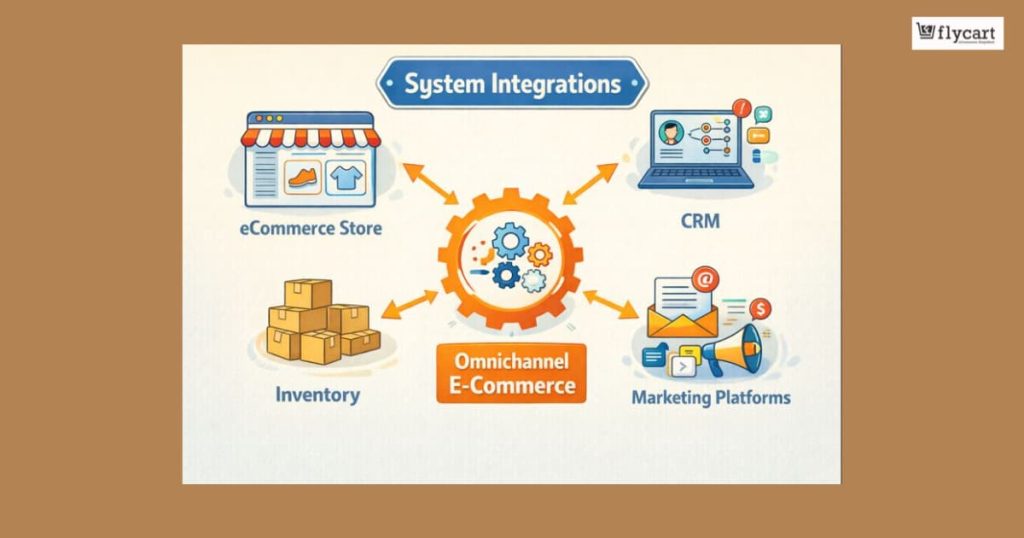
Integration benefits include:
- Synchronizing inventory across all sales channels to prevent stock issues.
- Unifying customer data for better personalization and targeted campaigns.
- Automating routine tasks like order processing, promotions, and reporting.
- Connecting CRM, email marketing, and analytics tools for actionable insights.
- Supporting scalability by making system management easier as your store grows.
4. Align Marketing & Promotions
Even with multiple sales channels, your marketing campaigns should feel like one cohesive experience.
Misaligned messaging can confuse customers and reduce trust.
To align marketing and promotions effectively:
- Use a consistent tone, branding, and visuals across channels.
- Schedule campaigns to complement one another rather than compete.
- Automate personalized promotions, cart recovery emails, and loyalty offers.
- Leverage insights from analytics to target the right customers at the right time.
- Monitor campaign performance to optimize messaging and engagement.
When executed properly, aligned marketing strengthens your ecommerce omnichannel strategy, enhances brand recall, and drives higher conversions.
5. Optimize for Scalability
A scalable omnichannel commerce solution ensures your business can grow without adding unnecessary complexity. Automation, optimization, and smart tools are essential for sustainable expansion:
- Automate repetitive processes like inventory updates, discounts, and notifications.
- Use analytics to focus on high-performing channels and campaigns.
- Continuously test workflows and promotions to refine customer experiences.
- Implement systems that can handle increased traffic, orders, and channels.
By focusing on scalability, you ensure that your ecommerce and multi-channel strategy remains efficient, customer-friendly, and ready for growth.
Data, Customer Experience, and Personalization in Omnichannel
Data is the backbone of omnichannel ecommerce.
Unified data enables:
- Personalized offers
- Behavior-based discounts
- Channel-specific messaging.
Customers expect brands to remember their preferences, no matter where they interact.
This is where advanced pricing and discount tools become essential.
Inventory, Pricing, and Promotions Across Channels
Managing inventory and promotions across channels is one of the biggest challenges in omnichannel ecommerce.
Key best practices:
- Centralize inventory management
- Sync pricing rules across platforms
- Maintain consistent discount logic.
Without proper tools, promotions can quickly become chaotic.
Common Challenges in Ecommerce and Omnichannel Execution
Even with the right strategy, challenges exist:
- Data silos
- Inconsistent pricing
- Manual promotion management
- Tool overload.
Most issues arise from using disconnected systems instead of integrated omnichannel commerce solutions.
How WooCommerce Fits into an Omnichannel Strategy?
WooCommerce is highly flexible, making it ideal for ecommerce and omnichannel growth.
Benefits include:
- Full ownership of data
- Plugin-based customization
- Integration with marketplaces and tools.
With the right setup, WooCommerce becomes a powerful multichannel ecommerce platform.
Omnichannel for WooCommerce: Best Practices
To implement omnichannel for WooCommerce, focus on:
- Centralized inventory management
- Unified discount and pricing rules
- Seamless checkout experiences
- Consistent promotions across channels.
WooCommerce store owners who invest in omnichannel early scale faster and more sustainably.
How Discount Rules for WooCommerce – Pro Supports Omnichannel Growth?
Discounts and pricing play a huge role in omnichannel ecommerce success.
Discount Rules for WooCommerce – Pro (by Flycart) helps WooCommerce stores:
- Create advanced pricing rules
- Run consistent promotions across channels
- Personalize offers based on customer behavior
- Automate bulk discounts, BOGO deals, and cart-based offers.
For ecommerce multichannel strategy execution, this plugin ensures promotions stay aligned across customer touchpoints, without manual effort.
If you’re serious about scaling omnichannel for WooCommerce, having a powerful discount engine is essential.
Future Trends in Omnichannel Ecommerce
The future of omnichannel ecommerce includes:
- AI-driven personalization
- Real-time customer data usage
- Dynamic pricing across channels
- Deeper ecommerce and multichannel integration.
Businesses that prepare now will lead tomorrow.
Streamline your omnichannel ecommerce promotions with Discount Rules for WooCommerce – Pro. Automate discounts, ensure consistent pricing, and grow your store smarter.
Conclusion
Building a scalable omnichannel ecommerce strategy is no longer optional; it’s a growth requirement.
By aligning ecommerce and omnichannel experiences, choosing the right omnichannel ecommerce platform, and using smart multichannel commerce solutions, businesses can deliver seamless customer journeys at scale.
For WooCommerce store owners, combining omnichannel best practices with tools like Discount Rules for WooCommerce –Pro creates a strong foundation for long-term success.
Also Read:
- How Social Proof Plays a Major Role in eCommerce Conversions?
- Why Customers Are Not Buying in Your eCommerce Store?
Frequently Asked Questions
Omnichannel ecommerce integrates all customer touchpoints into one seamless shopping experience.
Ecommerce focuses on online selling, while omnichannel focuses on a unified customer experience across channels.
Yes, WooCommerce is flexible and supports omnichannel ecommerce with the right plugins and integrations.
Examples include cross-channel discounts, unified loyalty programs, and personalized offers across platforms.
Consistent and personalized discounts improve conversions and customer loyalty across channels.