
B2B ecommerce is no longer playing catch‑up with B2C!
It’s evolving faster, scaling bigger, and becoming more complex with every passing year.
By 2026, digital buying is the default behavior for B2B
buyers, not a secondary option; it is projected to surpass $3 trillion by 2027.
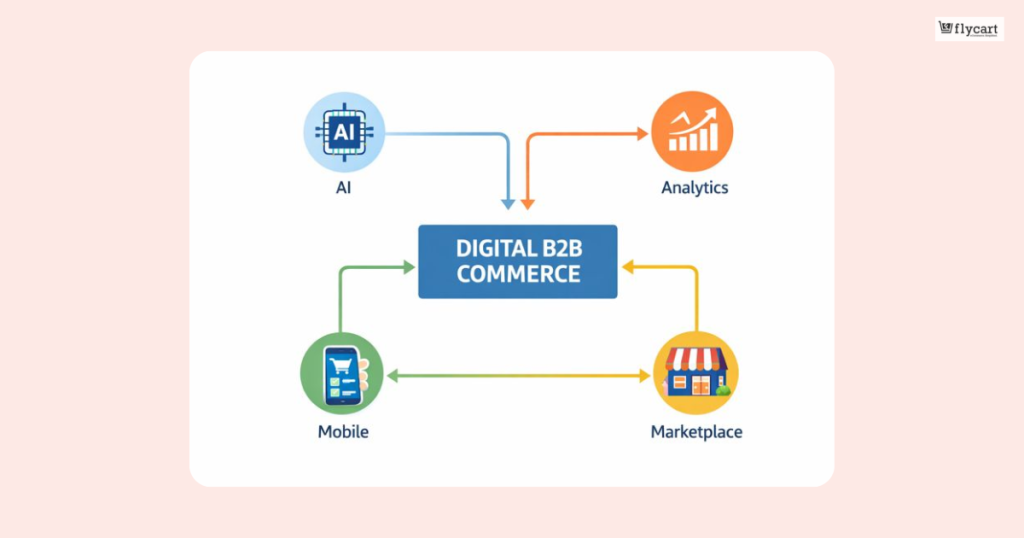
Buyers expect speed, personalization, self‑service, and intelligence at every stage of the journey.
What’s changing is not just how businesses sell online, but how buyers evaluate, decide, and reorder.
Decision‑makers now research independently, compare suppliers digitally, and expect frictionless purchasing experiences across devices and channels.
That’s why tracking ecommerce B2B trends is critical.
The right trends help you future‑proof operations, improve margins, and meet rising buyer expectations.
In this guide, I’ll break down the top 5 ecommerce B2B trends for 2026, explain why they matter, and show how B2B store owners can use them for sustainable growth.
Boost your WooCommerce store sales effortlessly with the Discount Rules Pro plugin – create smart B2B discounts in minutes.
Table of contents
- Top 5 Ecommerce B2B Trends (2026)
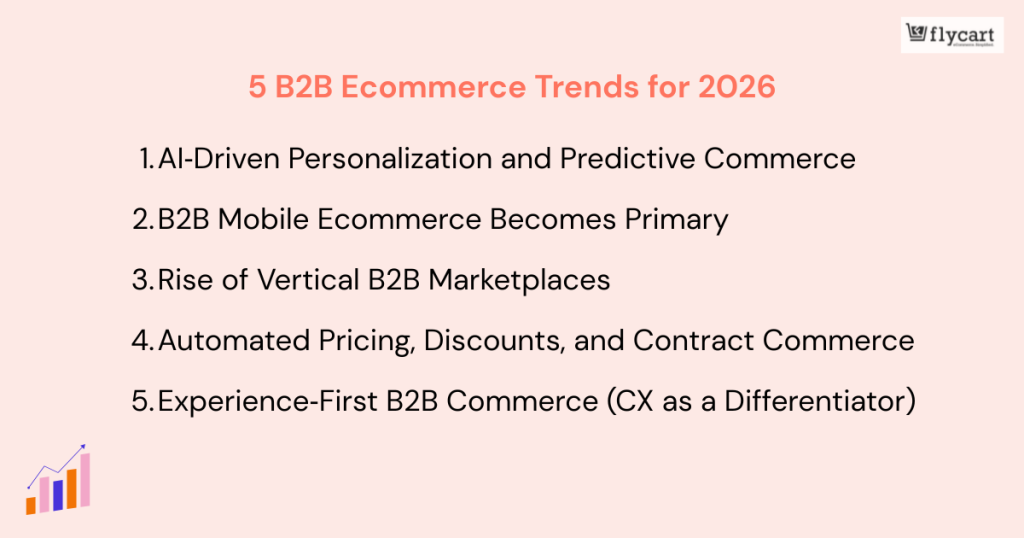
- 1. AI‑Driven Personalization and Predictive Commerce
- 2. B2B Mobile Ecommerce Becomes Primary
- 3. Rise of Vertical B2B Marketplaces
- 4. Automated Pricing, Discounts, and Contract Commerce
- 5. Experience‑First B2B Commerce (CX as a Differentiator)
- Conclusion
- Frequently Asked Questions
Top 5 Ecommerce B2B Trends (2026)
Let’s explore the 5 B2B eCommerce trends that drive growth in 2026:
1. AI‑Driven Personalization and Predictive Commerce
Artificial intelligence is no longer experimental in B2B ecommerce.
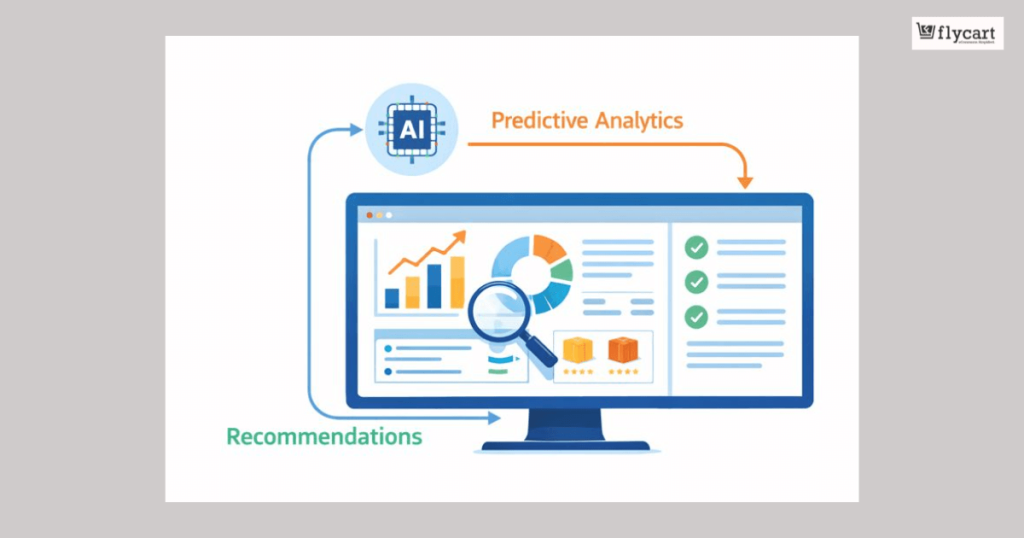
In 2026, AI sits at the core of advanced ecommerce B2B trends, powering everything from product recommendations to demand forecasting.
AI analyzes historical purchase data, browsing behavior, reorder frequency, and account‑level patterns to predict what a buyer needs before they search for it.
This creates smarter catalogs, faster reorders, and more relevant offers for every customer segment.
Why does this trend matter?
B2B buyers deal with large catalogs, repeat purchases, and negotiated pricing.
AI reduces complexity by automatically surfacing the right products, bundles, and pricing. This shortens buying cycles and improves average order value without increasing sales effort.
Impact on B2B Businesses
- Wholesalers can restock faster with AI-driven predictions instead of guesswork.
- Manufacturers get clearer demand forecasts, helping them plan production more accurately.
- Distributors rely less on manual sales efforts as AI supports smarter, automated buying journeys.
These AI-powered ecommerce B2B trends are especially valuable for businesses managing large product catalogs and repeat buyers.
How B2B Store Owners Can Apply This Trend?
AI-driven personalization and predictive commerce are transforming how B2B buyers interact with online stores.
Store owners can leverage these tools to increase efficiency, improve customer satisfaction, and drive growth:
A. Use AI for Product Recommendations and Cross-Selling
AI analyzes past purchase behavior, browsing patterns, and account-specific needs to suggest relevant products automatically.
Personalized recommendations help buyers discover complementary items, increase average order value, and reduce the time spent searching through large catalogs.
B. Enable Predictive Reordering for Logged-In Customers
For repeat orders, AI can predict what a buyer will need and when, based on past purchase frequency and inventory levels.
Offering predictive reordering options streamlines the purchasing process, ensures timely fulfillment, and strengthens customer loyalty.
C. Automate Segmentation for Targeted Promotions
AI can segment customers based on purchase history, order size, or engagement level, allowing store owners to send highly relevant promotions or offers.
This ensures that marketing efforts are targeted, effective, and reduce unnecessary discounting.
D. Optimize Inventory and Forecast Demand
AI helps forecast demand at the SKU and account level, allowing businesses to optimize stock levels and prevent overstocking or stockouts.
Accurate predictions save costs and improve fulfillment efficiency.
E. Track and Refine Performance
AI tools provide insights into which recommendations, promotions, or predictive reorder suggestions are most effective.
Store owners can continuously refine strategies for better conversion and higher revenue.
Implementing AI-driven personalization and predictive commerce allows B2B stores to deliver smarter, faster, and more relevant buying experiences, increasing conversions, repeat purchases, and long-term customer satisfaction.
Tips to get started:
- Start small. Use AI for recommendations and analytics before expanding to full automation.
- Clean product and order data are key.
2. B2B Mobile Ecommerce Becomes Primary
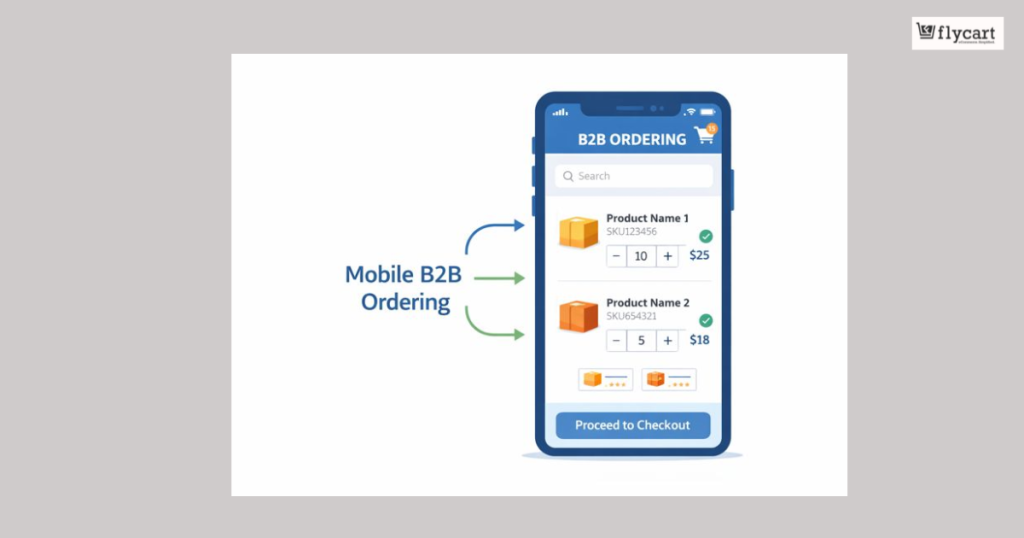
B2B purchasing isn’t happening at a desk anymore.
In 2026, b2b mobile ecommerce will be the main way buyers explore catalogs, reorder products, and approve transactions. Mobile experiences need to feel fast and intuitive.
Sales reps, procurement managers, and decision‑makers increasingly place orders on the go. Mobile‑first design is now a requirement, not an enhancement.
Why does this trend matter?
Poor mobile UX leads to abandoned carts, delayed purchases, and frustrated buyers.
B2B ecommerce trends show that mobile‑optimized checkout and account dashboards directly impact conversion rates.
Impact on the B2B Industry
- Faster reorder cycles
- Higher engagement from field sales teams
- Improved accessibility for global buyers.
How B2B Mobile Ecommerce Works in Real Online Stores?
With B2B buyers increasingly using smartphones and tablets for purchasing, mobile ecommerce is becoming the primary channel for 2026.
Here’s how store owners can make it work in practice:
A. Optimize Mobile Checkout and Login Flows
A smooth, fast mobile checkout is essential. Minimize the number of steps, use autofill where possible, and make login quick and secure.
The easier it is for buyers to complete purchases on mobile, the higher the conversion rates and repeat orders.
B Enable One-Click Reorders
B2B buyers often make repeat purchases.
One-click reordering on mobile devices saves time and reduces friction, making it more likely that buyers complete repeat orders without delay.
C. Design Mobile-Friendly Pricing Tables
Large spreadsheets or complex pricing tables don’t work well on small screens.
Simplify pricing displays, highlight key information, and use collapsible sections if needed. Clear mobile pricing helps buyers make decisions quickly and confidently.
D. Prioritize Speed and Performance
Mobile buyers expect app-like responsiveness.
Optimize images, reduce page load times, and ensure smooth navigation to prevent frustration and abandoned carts.
E. Incorporate Mobile-Specific Features
Consider features like push notifications for reorder reminders, QR code scanning for product lookup, or mobile dashboards that show account activity.
These tools make mobile shopping more convenient and engaging.
Benefits for Store Owners:
By focusing on mobile usability, store owners can increase conversion rates, improve order frequency, and enhance overall buyer satisfaction, critical factors in modern B2B ecommerce.
Practical tips:
- Test your store on real devices, not just emulators.
- Prioritize speed, thumb‑friendly navigation, and minimal form fields.
3. Rise of Vertical B2B Marketplaces
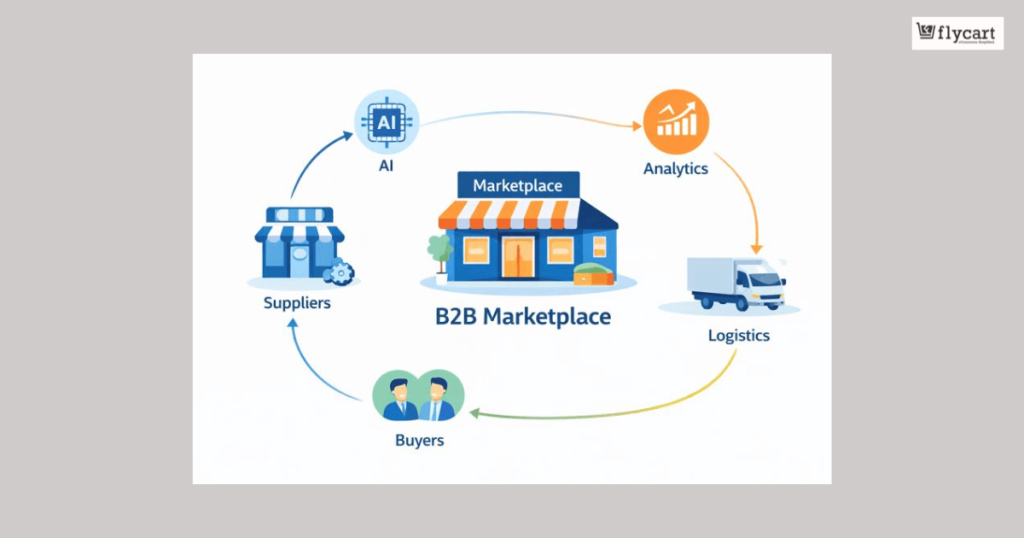
One of the fastest-growing b2b marketplace trends is the shift toward niche, vertical-specific marketplaces.
Instead of relying on large, general-purpose platforms that try to serve everyone, B2B buyers are increasingly choosing marketplaces built specifically for their industry.
These platforms focus on a single vertical—such as manufacturing, healthcare, construction, or wholesale, making them far more relevant to how businesses actually buy.
Vertical B2B marketplaces bring together curated suppliers, industry-specific product catalogs, and standardized pricing models that buyers already understand.
Because the sellers are vetted and the products are aligned with industry standards, buyers feel more confident placing orders without lengthy back-and-forth conversations.
Trust is built faster because the marketplace speaks the buyer’s language and understands their operational needs.
Why does this trend matter?
B2B buyers are under pressure to move faster while managing fewer suppliers.
Procurement teams want to reduce vendor sprawl, speed up sourcing, and make confident decisions without weeks of comparison.
Vertical marketplaces solve this by simplifying supplier discovery, making product comparisons easier, and reducing the risk of choosing the wrong vendor.
This trend becomes even more important as buyers expect self-service purchasing, transparent pricing, and quicker approvals.
For sellers, these marketplaces open new distribution channels, lower customer acquisition costs, and provide access to buyers who are already searching with strong purchase intent.
Impact on B2B Businesses
- New distribution channels for suppliers
- Reduced customer acquisition costs
- Increased brand visibility.
This is one of the most influential b2b ecommerce trends for manufacturers and wholesalers.
How B2B Sellers Can Leverage Vertical Marketplaces for Growth?
The rise of vertical, niche-specific B2B marketplaces offers sellers new ways to reach buyers efficiently.
Here’s how store owners can turn this trend into actionable growth:
A. Integrate with Relevant Marketplaces
Identify industry-specific marketplaces where your buyers are actively searching for products.
Integration allows your products to reach a larger, targeted audience without heavy marketing spend. This increases visibility and can drive new leads and sales.
B. Build Private Marketplaces for Distributors
For manufacturers and wholesalers, creating private marketplaces for distributors or key clients helps streamline orders, provide tailored pricing, and strengthen long-term relationships.
Private marketplaces create a controlled environment while offering buyers the convenience of digital commerce.
C. Standardize Product Data
Accurate, consistent product information is essential for marketplace success. Standardized SKUs, detailed descriptions, images, and technical specifications make it easier for buyers to compare products, reduce errors, and boost trust.
Clean product data also ensures smoother integration with multiple marketplaces simultaneously.
D. Use Analytics to Optimize Presence
Monitor which marketplaces drive the most traffic and conversions.
Use this data to optimize listings, adjust pricing, and focus on channels that generate the highest ROI.
E. Encourage Reviews and Ratings
Many vertical marketplaces highlight top-rated sellers.
Encouraging satisfied buyers to leave reviews helps build credibility and can increase your visibility compared to competitors.
Important Tip for Growth: Treat marketplaces as acquisition channels, then move repeat buyers to your owned ecommerce platform.
Related Read: Build an Online Multivendor WooCommerce Social Marketplace
4. Automated Pricing, Discounts, and Contract Commerce
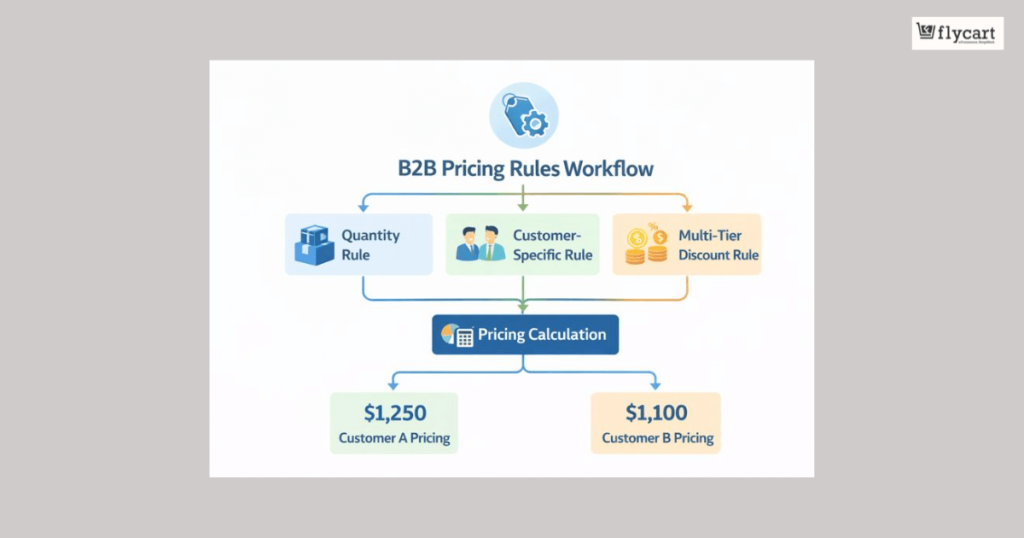
Pricing complexity has long been one of the biggest challenges in B2B ecommerce.
By 2026, relying on manual price updates, spreadsheets, or one-off calculations will no longer be sustainable.
Modern B2B buyers expect quick, accurate, and personalized pricing at every touchpoint, and mistakes can easily erode trust or slow down purchase decisions.
Automation is now stepping in to handle this complexity. It allows businesses to manage volume-based pricing, tiered discounts, contract-specific rates, and promotional offers, all dynamically.
Instead of manually adjusting prices for each customer or order, automated systems calculate and apply the correct price in real time.
Why does this trend matter?
Transparent and personalized pricing has become a core expectation for B2B buyers. They want to see clear pricing that matches their agreements and purchase history without extra effort.
Automation reduces human error, ensures consistent pricing across channels, and builds trust with buyers.
Businesses can close deals faster, improve margins, and scale operations without adding extra administrative work.
Impact on B2B eCommerce
- Faster deal closure
- Consistent pricing across channels
- Higher margins.
Ways Store Owners Can Turn This Trend into Growth
Automated pricing, discounts, and contract commerce can directly boost sales and operational efficiency.
Here’s how store owners can leverage this trend:
A. Implement Tiered and Volume-Based Pricing
Offer discounts based on order quantity or customer segment. This encourages larger orders and rewards loyal buyers, increasing average order value.
B. Automate Contract and Customer-Specific Pricing
For recurring clients or long-term contracts, automate pricing according to agreements. This reduces manual errors, ensures consistency, and builds buyer trust.
C. Run Dynamic Promotions and Time-Limited Offers
Introduce limited-time deals or product-specific promotions automatically. Automation ensures the right discounts reach the right buyers at the right time, increasing conversions.
D. Use Smart Bundling
Create bundles of complementary products with automated pricing. Bundles simplify the buying process for customers and increase overall order value.
E. Monitor Performance and Adjust in Real-Time
Automation tools can provide analytics on which discounts or pricing strategies are most effective, allowing store owners to adjust tactics quickly for higher growth.
Optional WooCommerce Tip
If you’re using WooCommerce, free plugins like Flycart’s Discount Rules for WooCommerce make it easy to create bulk discounts, tiered pricing, BOGO offers, and contract-specific pricing without manual effort.
This helps store owners implement these strategies efficiently and in line with modern ecommerce B2B trends.
Practical advice: Start with rule‑based discounts before moving to dynamic pricing models.
Automate WooCommerce pricing and promotions with the Discount Rules Pro plugin to increase conversions without extra work.
5. Experience‑First B2B Commerce (CX as a Differentiator)
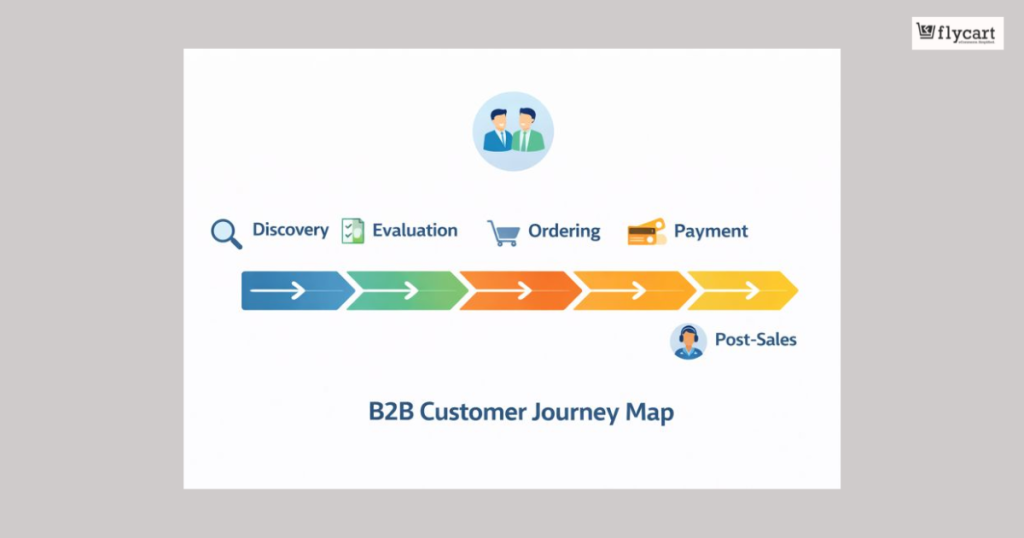
Customer experience has become a key differentiator in B2B ecommerce.
In 2026, buyers expect the same simplicity, speed, and convenience they experience in B2C shopping, even when dealing with complex B2B processes like bulk orders, approvals, or negotiated pricing.
The challenge for businesses is to make the buying journey seamless while managing complexity behind the scenes.
Why does this trend matter?
Even if your pricing is competitive, a confusing or slow purchasing experience can drive buyers to competitors.
A smooth, intuitive experience increases customer satisfaction, encourages repeat orders, and strengthens loyalty.
Businesses that prioritize experience-first B2B commerce can reduce churn, boost lifetime value, and stand out in an increasingly crowded market.
B2B Industry Impact
- Higher retention
- Increased lifetime value
- Reduced sales dependency.
How Can Store Owners Improve CX?
Improving customer experience (CX) in B2B ecommerce goes beyond just offering products; it’s about making the buying process smooth, intuitive, and personalized.
Here’s how store owners can make a real impact:
A. Self‑Service Portals
B2B buyers prefer to manage their purchases on their own schedule. Self-service portals allow customers to browse catalogs, place orders, view invoices, and manage returns without contacting a sales rep for every action.
This not only saves time for buyers but also reduces the workload for your sales and support teams. A well-designed portal empowers customers and builds trust.
B. Transparent Order Tracking
In B2B commerce, buyers often place large or repeat orders that may take days or weeks to fulfill.
Providing real-time tracking and status updates keeps customers informed and reduces uncertainty.
Transparent order tracking increases confidence, decreases follow-up queries, and improves overall satisfaction. It also shows that your business is reliable and organized, which strengthens long-term relationships.
C. Personalized Dashboards
Every B2B buyer has unique needs, specific pricing, preferred products, or recurring orders.
Personalized dashboards tailor the experience to each customer by highlighting frequently purchased items, suggesting upsells or cross-sells, and showing account-specific pricing or discounts.
This creates a sense of attention and care, making the buying process faster and more enjoyable.
By implementing these strategies, store owners can:
- Reduce friction and improve repeat purchases.
- Enhance customer satisfaction and loyalty.
- Streamline internal operations while empowering buyers.
Tip to execute: Map the buyer journey and remove friction at every stage.
Turn rules into revenue: Discount Rules for WooCommerce makes B2B discounts simple and smart.
Conclusion
The top B2B ecommerce trends for 2026 revolve around intelligence, automation, mobility, and delivering a seamless customer experience.
Businesses that embrace these trends early can grow faster, win buyer loyalty, and stay ahead of the competition.
Practical tools make it easier to put these trends into action.
For example, if you’re using WooCommerce, Flycart’s “Discount Rules for WooCommerce -Pro” helps automate pricing, discounts, and promotions, making it simple to boost sales without adding extra work.
By combining smart technology with a focus on buyer experience, B2B store owners can turn these trends into real growth opportunities.
Also Read:
- Why Customers Are Not Buying in Your eCommerce Store?
- How Social Proof Plays a Major Role in eCommerce Conversions?
- 10 Types of eCommerce Marketing Your Online Store Should Follow
Frequently Asked Questions
Start by centralizing data, adopting AI‑ready tools, and automating one process at a time.
Focus on structured content, clear product data, and buyer‑focused FAQs.
Yes. Buyers expect speed, personalization, and self‑service. Invest in UX and automation.
Smart discounting improves conversions and loyalty when automated correctly.
No. They complement direct stores and act as discovery channels.